What does a refrigerator compressor actually do?
Think of the compressor as your refrigerator's heart: a small, hermetically sealed pump at the back-bottom of the fridge that keeps refrigerant circulating through the whole cooling loop. It squeezes low-pressure refrigerant gas into a high-pressure, high-temperature gas, pushes it through the condenser coils where it sheds heat, and sends it on toward the evaporator — where the actual cooling happens. When the compressor stops pumping properly, the loop stalls, and no amount of thermostat-twiddling will bring the cold back.
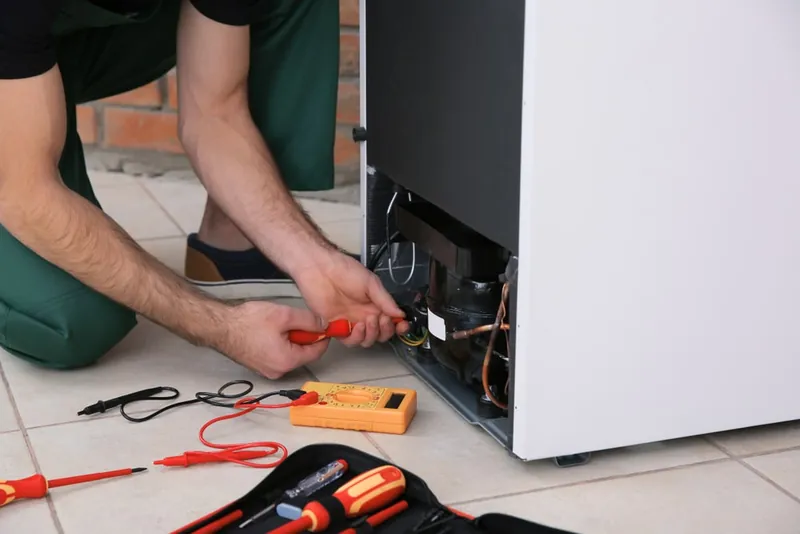
Most home refrigerators use one of two compressor designs. Older and mid-range models typically have a reciprocating compressor — a piston-style pump that cycles on and off. Many newer high-efficiency models use an inverter or linear compressor, which varies its speed instead of cycling, running quieter and using less energy. Knowing which type your fridge has matters, because the parts, the diagnostic approach, and the replacement job all differ. A technician from Fridge Doctor's refrigerator repair network will identify your compressor type before recommending anything.
How does compressor repair and replacement work?
Here's the part most homeowners don't realize: the compressor lives inside the sealed system — a closed loop of copper tubing filled with pressurized refrigerant. "Repairing" a compressor almost always means replacing it, because these hermetic units are factory-sealed and aren't rebuilt in the field. The job is really a sealed-system procedure, and it follows a strict sequence that protects both the technician and your fridge.
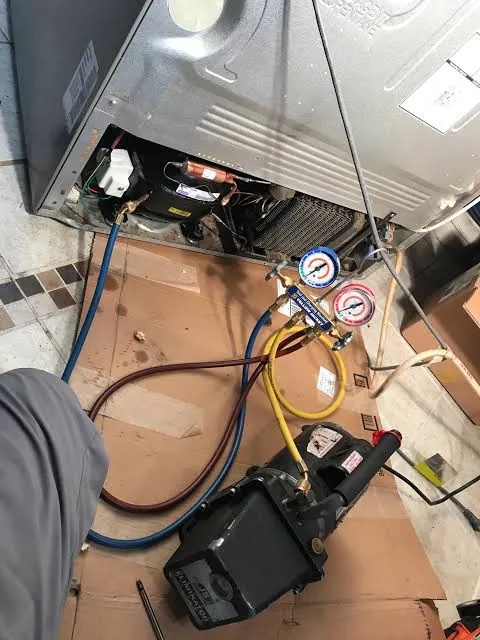
First, the technician recovers the existing refrigerant with specialized equipment — federal rules require certified technicians to capture it rather than venting it, which is why this work is strictly pro-only. Then the old compressor is cut out of the copper lines, the new unit is brazed (high-temperature soldered) into place, and the system is pressure-tested for leaks. Next comes a deep vacuum: a vacuum pump pulls the system down to remove air and moisture, which would otherwise contaminate the refrigerant and cripple cooling. Finally, the system is recharged with the exact refrigerant type and weight your model specifies, and the fridge runs through monitored cooling cycles to confirm everything holds.
Why this is never DIY: the sealed system holds refrigerant under pressure, and opening it without certified recovery equipment is illegal under federal regulations — plus escaping refrigerant can cause frostbite and serious eye injury. Safe do-it-yourself work stops at the outside of the sealed system (see the checks below). The moment a copper line needs cutting, it's a job for a certified technician — Fridge Doctor can connect you with one.
8 warning signs your compressor is failing
Compressors rarely die without announcing it first. If you recognize any of these, call sooner rather than later — a struggling compressor can take other parts down with it.
- The fridge runs but won't cool. The classic compressor symptom: you hear it humming away, yet the fresh-food section creeps into the 50s and food spoils early. The freezer may still feel cold-ish because it's first in the cooling loop.
- Clicking, then silence, on repeat. A click every few minutes followed by silence usually means the start relay or overload protector is trying to kick the compressor on and giving up. Left alone, this cycling can finish off a weak compressor.
- The compressor is burning hot. Compressors run warm by design, but one that's too hot to touch comfortably is working far too hard — often because of dirty coils, poor ventilation, or internal wear.
- A new, louder hum or buzz. A healthy compressor hums quietly. A sudden loud buzz, rattle, or vibration that shakes the fridge cabinet points to worn internal mounts or a failing motor.
- It never cycles off. A compressor that runs around the clock can't reach its target temperature — a sign it's lost pumping efficiency or the system is low on refrigerant.
- The fridge trips the breaker. A compressor with an internal electrical short draws far more current than it should, tripping the circuit. Reset the breaker once; if it trips again, stop and call a pro.
- Food spoiling faster with unchanged settings. When milk sours days early and the thermostat hasn't moved, the cooling loop is underperforming — and the compressor is the prime suspect.
- Oily residue near the compressor. Refrigerant circulates with oil. Dark, oily grime around compressor fittings can hint at a slow refrigerant leak at a joint or the compressor shell itself.
If several of these show up together — say, the clicking pattern plus a warming fridge — describe them when you call (571) 773-0778. The pattern tells the technician a lot before they even arrive. And if the food situation is getting urgent, our emergency fridge repair guide explains how urgent scheduling works.
What causes a fridge compressor to fail?
Compressors are built to run for many years, so when one fails early, there's usually a reason — and knowing the reason matters, because replacing a compressor without fixing what killed the last one just starts the countdown again.
The most common killer is heat. Dust-choked condenser coils can't shed heat, so the compressor runs hotter and longer than designed, and heat breaks down the internal oil that keeps it alive. Poor ventilation does the same thing: a fridge shoved tight against the wall or wedged into a cabinet with no breathing room slowly cooks its own compressor. Electrical stress is next — power surges and brownouts hammer the compressor's windings and the start components, which is why technicians often ask about recent outages. Age and wear eventually win on their own: bearings loosen, valves leak internally, and pumping efficiency fades until the fridge can't hold temperature. A slow refrigerant leak forces the compressor to run constantly to compensate, and a failed start relay left clicking for weeks can overheat and damage an otherwise healthy compressor. Sometimes the fault is just a manufacturing defect in a particular compressor batch — another reason an honest diagnosis beats a guess.
Repair or replace? What decides it
A compressor replacement is one of the bigger refrigerator repairs, so the honest question isn't just "can it be fixed" but "should it be." Here's what tilts the decision:
| Factor | What it means for your decision |
|---|---|
| Fridge age and overall condition | A mid-life fridge in good shape is usually worth saving; a 15-plus-year-old unit with worn seals and tired fans often isn't. |
| Compressor type | Standard reciprocating compressors are widely available; some inverter/linear units are model-specific and harder to source. |
| Refrigerant type | Older refrigerants can complicate service; your technician will explain what your model uses and what that means. |
| Parts availability | If the exact compressor is in stock, the job moves fast; rare or discontinued models add waiting time. |
| What else is worn | If the diagnosis uncovers multiple failing parts beyond the compressor, replacement starts looking smarter. |
Pro tip: ask the technician to put the comparison in plain terms — "fix it for X more years" versus "replace it" — before authorizing sealed-system work. The Leesburg fridge experts at Fridge Doctor will give you that straight answer, not a sales pitch.
Fridge compressor repair FAQs
Straight answers about compressor problems in Leesburg — no jargon, no dodging.
Can a fridge compressor be repaired, or does it always need replacing?
Sometimes the real culprit isn't the compressor at all. A fridge that won't cool is often suffering from a failed start relay, overload protector, or run capacitor — all replaceable without opening the sealed system. A careful technician tests those components first. If the compressor itself is seized, has an internal electrical short, or can no longer pump, then replacement is the fix. Compressors are not rebuilt in the field.
How long does a compressor replacement take?
The sealed-system work itself is typically a half-day job: recover the refrigerant, cut out the old compressor, braze in the new one, pull a deep vacuum, recharge the system, and run monitored test cycles. If the correct compressor has to be ordered for your model, add the wait for the part to arrive. Your technician should give you a clear timeline before any work begins.
Will I lose all my food during a compressor replacement?
Plan ahead like you would for a moving day. The refrigerator will be off for several hours during sealed-system work, so move perishables into coolers with ice packs or ask a neighbor to share freezer space. Ask your technician how long your specific job should take so you can plan food storage accordingly.
Is it worth replacing the compressor on an older refrigerator?
It depends on the fridge's age, overall condition, and value. On a mid-life refrigerator that's otherwise in good shape, a compressor replacement can add years of service. On a 15-plus-year-old unit with worn door seals and tired fans, that money often goes further toward a new refrigerator. Ask your technician for an honest repair-versus-replace comparison for your specific unit.
Is compressor work dangerous? Can I do it myself?
The sealed system holds refrigerant under pressure, and federal rules require certified technicians to recover and handle it. Cutting into a refrigerant line without proper recovery is illegal and can cause frostbite or serious eye injury. Safe do-it-yourself work stops at the outside of the system: cleaning condenser coils, checking the start relay, and making sure the fridge has room to breathe. Leave the sealed system sealed.